---
In the IT world, network adapters may not seem exciting, but when a security flaw is found, they quickly become the center of attention. One such vulnerability is CVE-2021-33146, which targets certain Intel® Ethernet Adapters and Intel® Ethernet Controller I225 manageability firmware. In simple terms, missing input checks mean that strangers on your network might be able to see data they shouldn’t.
Let’s dive in, understand the threat, see how it works, and explore ways to stay safe.
What is CVE-2021-33146?
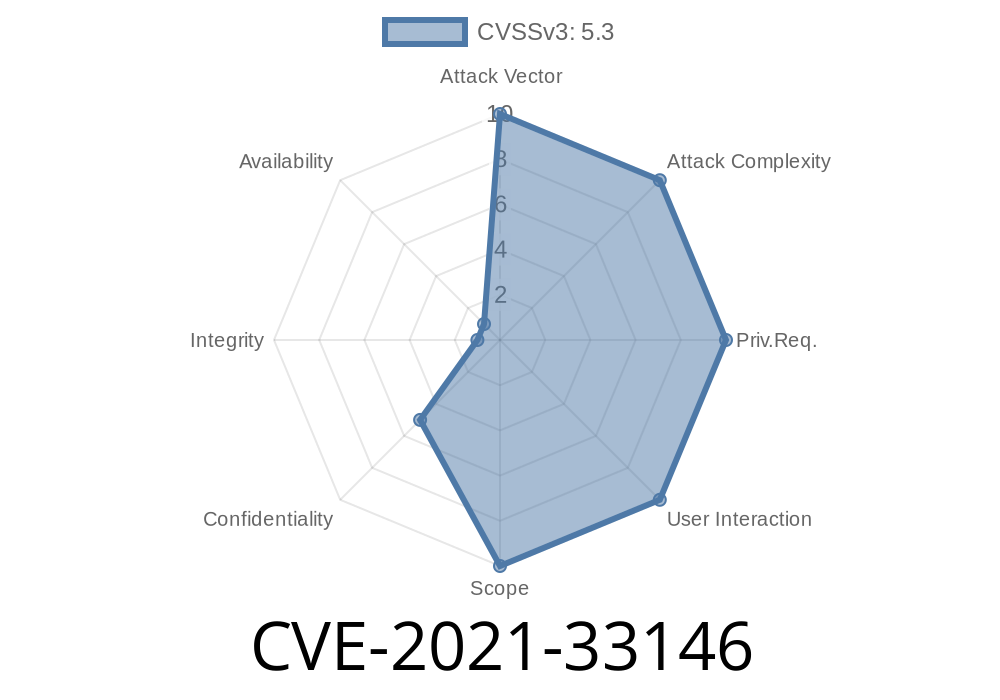
CVE-2021-33146 is a security vulnerability discovered in specific versions of the firmware for Intel® Ethernet Adapters and the Intel® Ethernet Controller I225 family. The issue? Improper input validation. The adapter’s firmware doesn’t sufficiently check what it’s being asked to do, making it possible for someone on the same network (without logging in) to trigger information leakage.
In security terms, that’s called “information disclosure” via unauthenticated network access.
Affected Firmware: Manageability firmware prior to specific versions
- CVE Reference: NVD - CVE-2021-33146
- Intel’s Advisory: INTEL-SA-00505
How Does It Work?
Let’s break it down simply. The firmware in question manages special networking features. When a device on the network sends certain requests, the firmware’s job is to process them. Normally, firmware validates every request—checks that all the parameters are “safe.” In this case, the firmware missed a check.
Scenario
- Someone on the same network as the vulnerable adapter sends a specially crafted packet—just the right kind of network message.
The firmware processes it without doing proper checks.
- Sensitive info, perhaps meant for management or debugging, gets pushed out and sent back in the reply.
Example Exploit Code (Simplified Python Snippet)
Below is a theoretical demonstration of how an attacker might automate sending a crafted packet using Python and the scapy library. Exact packets may differ, but this shows the concept.
from scapy.all import Ether, IP, UDP, sendp

# Set up network parameters
target_mac = "AA:BB:CC:DD:EE:FF"  # Replace with the adapter’s MAC
my_mac = "11:22:33:44:55:66"
target_ip = "192.168.1.10"         # Replace with the adapter’s IP

# Craft a UDP packet believed to trigger the bug
packet = Ether(src=my_mac, dst=target_mac) / \
         IP(dst=target_ip) / \
         UDP(sport=5555, dport=623) / \
         b'\xDE\xAD\xBE\xEF'  # Placeholder for malformed management payload

# Send the packet
sendp(packet, iface="eth")
*Note: The dport 623 is common for IPMI and management interfaces. Actual vulnerable packet structure is not public, so the payload here is illustrative.*
Network traffic statistics
While it’s not remote code execution, info disclosure can be a stepping stone for more serious attacks.
Enterprise Networks: Desktops or servers with Intel I225 series, unpatched.
- Anyone Using Unpatched Intel® Ethernet Adapters: Especially if management features are enabled and accessible.
How to Fix or Mitigate
- Update Firmware: Intel released new secure versions of the affected firmware. Visit the Intel support page or your device provider.
- Download Center: Intel Ethernet Drivers and Firmware
- Restrict Management Interfaces: Limit which network segments can reach manageability features or disable them unless they’re needed.
Original References
- Intel Security Advisory INTEL-SA-00505
- CVE Details Page
- Scapy Documentation
Conclusion
CVE-2021-33146 is a perfect example of how even non-obvious devices like network adapters can contain hidden dangers. By missing a simple security check in the firmware, sensitive information might leak out over the network without anyone logging in.
If you run Intel Ethernet hardware—especially in data centers—double-check your firmware versions and update them. Prevention is simple, but consequences can be costly if ignored.
Stay safe, keep your firmware patched, and always limit who can access management interfaces!
Timeline
Published on: 02/23/2024 21:15:09 UTC
Last modified on: 05/16/2024 21:15:48 UTC