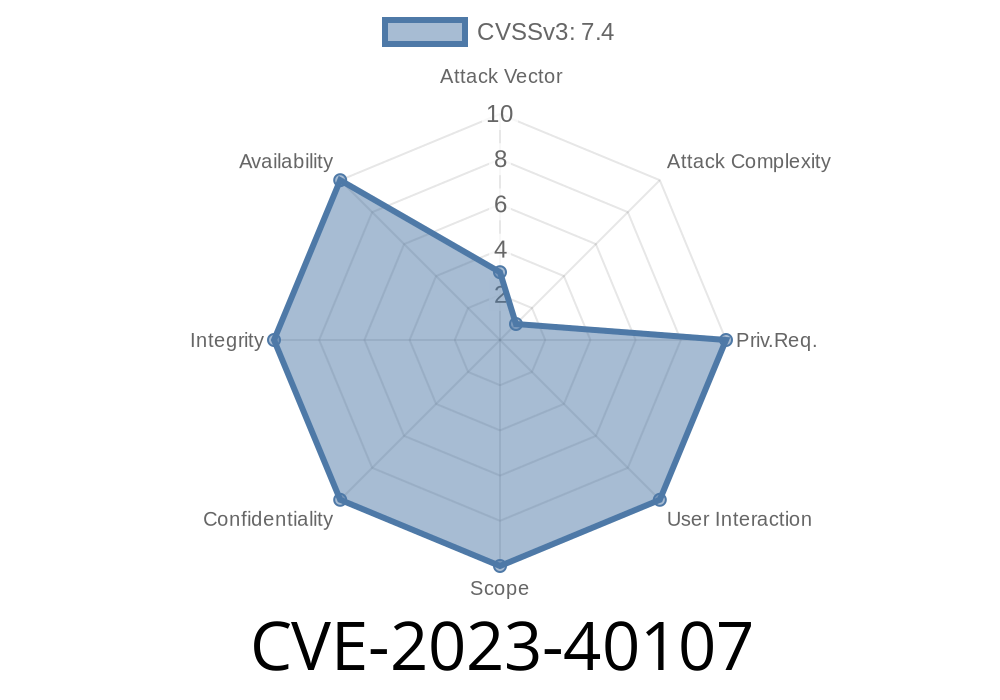
In August 2023, a serious vulnerability was discovered in the Android operating system, referenced as CVE-2023-40107. This bug, found inside the ARTPWriter class of the multimedia framework, can allow a malicious application to gain higher privileges on the device without needing user interaction or additional permissions.
The issue is classed as a *local privilege escalation* vulnerability. It lies in the mishandling of memory within the ARTPWriter.cpp file, where use-after-free occurs due to uninitialized data usage. This flaw opens the door for attackers already running code on the device to gain further control, potentially compromising the entire system.
This post breaks down the vulnerability, walks through a simplified code example, and discusses how exploitation is possible. For deeper learning, we've included original reference links at the end.
Understanding the Bug: Use-After-Free in ARTPWriter
ARTPWriter is part of Android's media server implementation, responsible for handling Real-time Transport Protocol (RTP) streams. A use-after-free vulnerability occurs when a program continues to use a pointer after the memory it points to has been freed — meaning the pointer now references potentially dangerous, unpredictable, or attacker-controlled data.
In this case, the problematic function in ARTPWriter.cpp does not ensure that memory is properly re-initialized after being freed, causing code in other parts of the system to unknowingly operate on invalid data.
Simplified Code Example
Here's an oversimplified, but illustrative, example (not the exact ARTPWriter code — for educational use only):
// In ARTPWriter.cpp

class ARTPWriter {
    Buffer* mBuffer;

public:
    void releaseBuffer() {
        if (mBuffer) {
            delete mBuffer;
            // mBuffer is not set to NULL - leads to dangling pointer!
        }
    }

    void writeToBuffer(const char* data) {
        // mBuffer may already have been released!
        if (mBuffer) {
            mBuffer->write(data); // <-- USE AFTER FREE occurs here
        }
    }
};
It tries to write to mBuffer — but memory is already freed.
4. If an attacker can influence the flow, they may control what memory lands at that location, or force a process crash, or inject their own code.
No Extra Permissions: The app only needs basic execution; no root or high privileges required.
- Potential Impact: Attacker code executes with media server privileges, which can bypass standard Android security boundaries.
Exploit Steps (Conceptual)
1. Craft Data: Attacker manipulates memory around the vulnerable pointer, possibly by carefully timing allocations and deallocations.
2. Trigger Use-After-Free: Call releaseBuffer(), then a function like writeToBuffer() before the pointer is reset or re-initialized.
3. Gain Privileges: If successful, attacker can execute arbitrary code in the privileged context of the media server, potentially escalating further.
Original References
- Android Security Bulletin—August 2023
- CVE-2023-40107 at NVD
- Patch Commit (AOSP)
Remediation
Android has patched this vulnerability. Update your device to the latest security patch to ensure you are protected. Device manufacturers roll out security patches at varying speeds, so check regularly.
Conclusion
CVE-2023-40107 shows how even small mistakes in memory management can have major consequences on system security. Use-after-free vulnerabilities like this one are particularly dangerous because they allow for reliable, high-impact exploits without user interaction or special permissions.
If you are a developer writing C/C++ code, always ensure that pointers are set to NULL after freeing, and consider using smart pointers or other memory safety practices.
> Stay updated, stay secure!
>
> For further reading, see the official Android security bulletin and patch references linked above.
Timeline
Published on: 02/15/2024 23:15:08 UTC
Last modified on: 08/21/2024 21:35:01 UTC