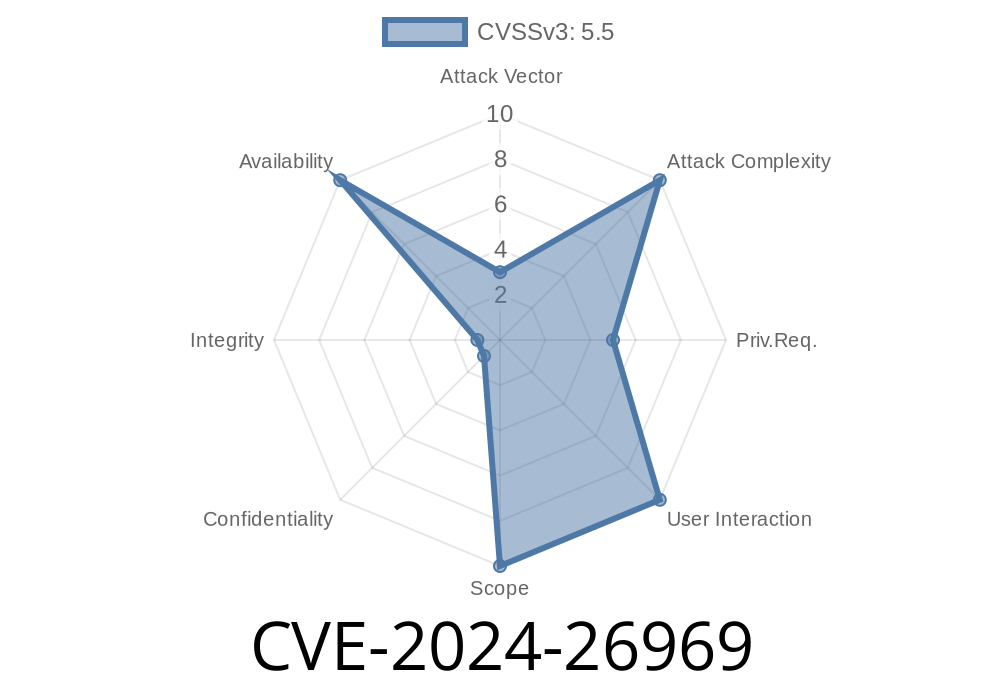
On February 2024, a vulnerability was addressed in the Linux kernel related to Qualcomm's IPQ8074 Global Clock Controller (GCC) driver. The vulnerability, identified as CVE-2024-26969, could lead to out-of-bound memory access. In simpler terms, the kernel could accidentally read memory it shouldn’t, leading to possible kernel crashes or instability.
Let’s break down what happened, why it’s important, how the patch works, and provide references and a practical code snippet. We’ll also discuss how such an issue may be abused, even if it’s not a classic remote exploit.
What Was the Problem?
In Linux’s kernel, frequency tables for clocks (clk) on Qualcomm IPQ8074 (often found in routers and embedded devices) are stored as arrays of structures. To mark the end of these arrays, kernel code expects a special empty element. This is a common C programming technique, typically a zero-filled structure.
However, some arrays in the code didn't have this terminator. Kernel functions like qcom_find_freq() and qcom_find_freq_floor() scan these arrays, relying on the terminator to know where to stop. Without it, the function might read past the array, accessing random memory.
Here is a simplified version of what the frequency table looked like before the patch
static struct freq_tbl clk_tbl_example[] = {
    F(100000, P_XO, 1, , ),
    F(500000, P_XO, 2, , ),
    // ...more entries...
    // MISSING: The terminating empty entry!
};
The kernel expected the array to end with a “zeroed” structure (empty entry), like so
static struct freq_tbl clk_tbl_example[] = {
    F(100000, P_XO, 1, , ),
    F(500000, P_XO, 2, , ),
    // ...more entries...
    { } // This is the terminator
};
The Patch
The fix simply added the missing terminator entry at the end of each affected frequency table array.
Patched code
static struct freq_tbl clk_tbl_example[] = {
    F(100000, P_XO, 1, , ),
    F(500000, P_XO, 2, , ),
    // ...more entries...
    { } // Terminator added to prevent out-of-bounds access
};
This prevents any function from reading past the array, as it can now check for the empty entry.
Exploit Details
This bug is not directly remotely exploitable in the way classic buffer overflows are, but it *can* be triggered by code that asks the kernel to switch to an out-of-range clock frequency. If a user or a buggy kernel module requested a frequency not present in the table, these search functions might scan beyond the array, reading information from neighboring memory.
Causing undefined behavior in system processes
Since most Linux devices using IPQ8074 chips are embedded devices (routers, access points), a crash could result in denial of service until the device is rebooted.
Real Exploit Example
Here's a demonstration code a kernel developer might use to trigger the bug (for educational purposes only):
// Kernel module example (do *not* use on production!)

struct freq_tbl {
    unsigned long freq;
    // ... other members ...
};

extern struct freq_tbl clk_tbl_example[];

void test_oob_access(void)
{
    int i = ;
    while (clk_tbl_example[i].freq != ) {
        i++;
    }
    // If terminator is missing, this loop goes out of bounds,
    // potentially crashing the kernel.
}
Mitigation
- Upgrade kernel: Install a kernel release containing the upstream patch
Backport patch: For device vendors, backport the fix into older LTS kernel versions
- Avoid requesting unsupported frequencies: Until patched, do not request atypical or out-of-range clock frequencies from userspace or custom drivers.
References
- Linux kernel patch: clk: qcom: gcc-ipq8074: fix terminating of frequency table arrays
- CVE-2024-26969 entry at NVD
- Qualcomm IPQ8074 Clock Controller driver source
Conclusion
CVE-2024-26969 is a subtle but serious bug in the Linux kernel’s Qualcomm clock controller driver. It shows how even minor oversights (like a missing empty structure at the end of an array) can lead to potential security and reliability issues in low-level code. While not directly exploitable for code execution, it could disrupt device operation and should be patched immediately on all affected devices.
*Stay updated, stay secure!*
Feel free to share, reference, or ask for more details on this vulnerability!
Timeline
Published on: 05/01/2024 06:15:13 UTC
Last modified on: 12/23/2024 13:58:07 UTC